83-Year-Old Taiwanese Tourist Fractures Hip on Wudang Mountain — Walks Next Day After Wuhan Union Hospital Microsurgery
"The Medical Skill Is Excellent, but the Human Warmth Is Even Better"
She was 83 years old, visiting mainland China from Taiwan for the first time in years, eager to see the legendary Wudang Mountain in Hubei province. The wet stone steps had other plans.
One slip. A fall onto her right hip. Excruciating pain. The diagnosis at a local hospital: right intertrochanteric comminuted fracture — a severe, multi-fragment break of the upper femur that, in an 83-year-old, can be a death sentence if not treated quickly and correctly.
She was transferred to Wuhan Union Hospital (Huazhong University of Science and Technology), one of Central China's most respected medical institutions.

Why Hip Fractures in the Elderly Are So Dangerous
Hip fractures in patients over 80 are not just orthopedic problems — they are medical emergencies with systemic consequences:
| Complication | Risk | Timeline |
|---|---|---|
| Pulmonary embolism | Blood clots from immobilization | Days to weeks after fracture |
| Pneumonia | Bed rest reduces lung function | Within 1-2 weeks |
| Pressure ulcers | Inability to reposition | Days |
| Cognitive decline | Delirium from pain, immobilization, unfamiliar environment | Immediate |
| One-year mortality | 20-30% for patients over 80 with hip fractures | Within 12 months |
The key to survival is early mobilization — getting the patient on their feet as quickly as possible. Every day of bed rest increases mortality risk. This means surgery must be fast, minimally traumatic, and allow immediate weight-bearing.
The Surgical Approach
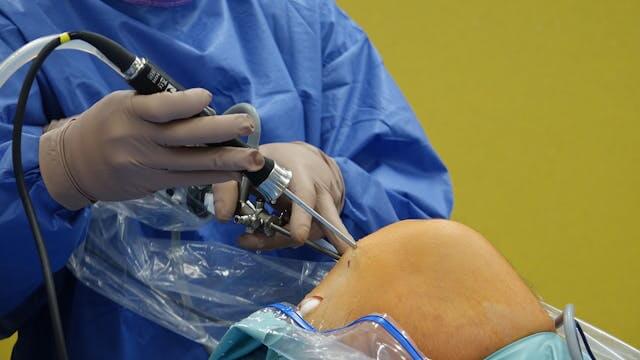
Dr. Jia Jie, Deputy Chief Physician of the Department of Bone and Joint Surgery at Wuhan Union Hospital, evaluated the patient and chose a minimally invasive femoral head replacement (hemiarthroplasty) — a procedure specifically designed for elderly patients with comminuted intertrochanteric fractures.
The approach prioritized three goals:
- Speed — Minimize time under anesthesia for an 83-year-old patient
- Minimal tissue damage — Small incision, limited blood loss, preservation of surrounding muscle
- Immediate stability — Allow weight-bearing the next day
The results:
| Surgical Metric | Outcome |
|---|---|
| Procedure time | 40 minutes |
| Incision | Small, minimally invasive |
| Blood loss | Minimal |
| Time to standing | Post-operative day 1 |
| Time to walking (with walker) | Post-operative day 1 |
| Hospital discharge | June 14, 2026 |
From Wudang Mountain to Walking Again
The morning after surgery, the 83-year-old patient stood up with the help of a walker and took her first steps. The nursing and rehabilitation teams worked alongside her to ensure safe, gradual mobilization.
By discharge day, she was mobile, stable, and — in her own words, delivered in a mix of Minnan dialect and Mandarin — profoundly grateful: "The medical skill is excellent, but the human warmth is even better."
She told the medical team she would share her experience with friends and family back in Taiwan, recommending the quality of medical care available on the mainland.

What This Case Demonstrates for International Travelers
Medical emergencies don't respect travel itineraries. This case illustrates several important points for anyone traveling in China:
1. World-class emergency care is accessible throughout China
Wuhan is not Beijing or Shanghai — yet Wuhan Union Hospital delivered surgical care that matches any global standard. China's medical infrastructure extends far beyond the first-tier cities.
2. Speed of care saves lives
In many Western countries, an 83-year-old with a hip fracture might wait 24-48 hours or longer for surgery due to operating room availability. At Wuhan Union Hospital, the patient was evaluated, planned, and operated on without unnecessary delay.
3. Cost advantage is dramatic
An emergency hip replacement for a foreign tourist in the US or Europe could easily cost $40,000-$80,000. In China, the same procedure — with the same quality outcomes — costs a fraction of that.
4. Language is not a barrier to excellent care
Despite the patient speaking primarily Minnan dialect (Taiwanese Hokkien), the care team communicated effectively and delivered compassionate, patient-centered care.
Emergency Hip Surgery Cost: China vs Western Countries
| Procedure | China (Wuhan Union Hospital) | United States | Japan |
|---|---|---|---|
| Hemiarthroplasty (emergency) | $5,000 - $10,000 | $30,000 - $60,000 | $15,000 - $25,000 |
| Total hip replacement | $8,000 - $14,000 | $32,000 - $50,000 | $18,000 - $30,000 |
| Hospital stay (per day) | $100 - $300 | $3,000 - $8,000 | $500 - $1,500 |
| Post-operative rehabilitation (per week) | $500 - $1,000 | $5,000 - $10,000 | $2,000 - $4,000 |
China prices include surgery, implant, hospital stay, and post-operative care.
Who Should Know About Emergency Orthopedic Care in China
This information is valuable for:
- Elderly travelers visiting China — Knowing that world-class emergency orthopedic care is available provides peace of mind
- Travel insurance providers — China's top hospitals offer high-quality emergency care at significantly lower costs than medical evacuation
- Families planning trips with elderly relatives — Understanding what resources exist in case of emergency
- Medical tourists — Even if you're traveling for a planned procedure, it's reassuring to know that emergency capacity exists for unexpected events
About Wuhan Union Hospital
Wuhan Union Hospital is one of China's most distinguished medical institutions:
- Affiliated with Huazhong University of Science and Technology Tongji Medical College — one of China's top medical schools
- Orthopedic department with comprehensive trauma, joint, and spine subspecialties
- 5,000+ beds with full emergency and critical care capability
- Located in Wuhan, Central China's transportation hub with high-speed rail connections nationwide
Frequently Asked Questions
What should I do if I have a medical emergency while traveling in China?
Call 120 (China's emergency number) or go to the nearest major hospital's emergency department. SinomedTrip clients have 24/7 access to our emergency coordination line, and we can help arrange transfer to a top-tier hospital if needed.
Will Chinese hospitals treat foreign patients in emergencies?
Yes. Chinese hospitals are legally required to provide emergency medical care regardless of nationality. Payment arrangements can be sorted out after stabilization.
Do I need travel insurance for medical trips to China?
We strongly recommend comprehensive travel insurance that covers emergency medical treatment and potential medical evacuation. However, the cost of emergency care in China is typically a fraction of what evacuation to your home country would cost.
Planning travel to China and want peace of mind about medical emergencies? Talk to our team →