West China Hospital Achieves World's First Laparoscopic Surgery for Recurrent Stomach Tumor
A Surgical First: Laparoscopic Removal of Recurrent Gastric GIST
West China Hospital — one of China's top three hospitals and a flagship institution of Sichuan University — has successfully completed what is believed to be the world's first reported case of laparoscopic surgery to remove a recurrent gastrointestinal stromal tumor (GIST) following a previous open abdominal operation.
The case was led by Dr. Yang Kun, Chief Physician at the hospital's Gastric Cancer Center, and has been formally documented as an international first in the medical literature.
The Patient's History
The patient had undergone open abdominal surgery years earlier to remove a gastric GIST — a type of tumor that grows in the wall of the stomach. During a recent follow-up examination, imaging revealed that the tumor had recurred near the original surgical site, with the new lesion measuring approximately 3 × 3 × 2 cm.
The previous open surgery had left a 20 cm abdominal scar with significant keloid formation — a clear indicator of the extensive internal adhesions that would be waiting inside.
Why This Case Was So Difficult
When a patient has had previous open abdominal surgery, the internal organs often develop dense, widespread adhesions — bands of scar tissue that bind organs together in abnormal ways. In this patient's case, the surgical team anticipated that the:
- Greater omentum (fatty tissue covering the intestines)
- Stomach wall
- Small intestine
- Transverse colon
...would all be fused together by thick scar tissue, completely distorting the normal anatomy.
This kind of adhesion is precisely why recurrent abdominal tumors after open surgery have traditionally been considered unsuitable for laparoscopic (keyhole) approaches. Most surgeons worldwide would default to another open procedure.
The Surgical Approach
The West China Hospital team chose to challenge this convention.
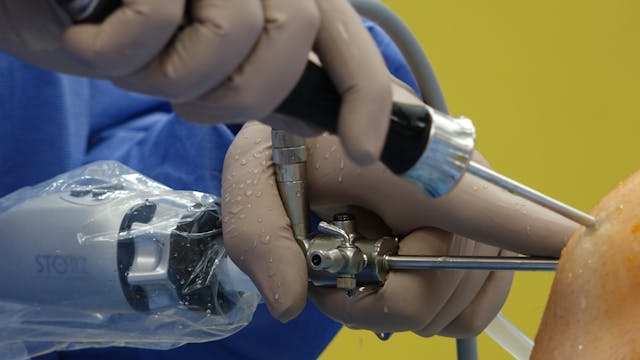
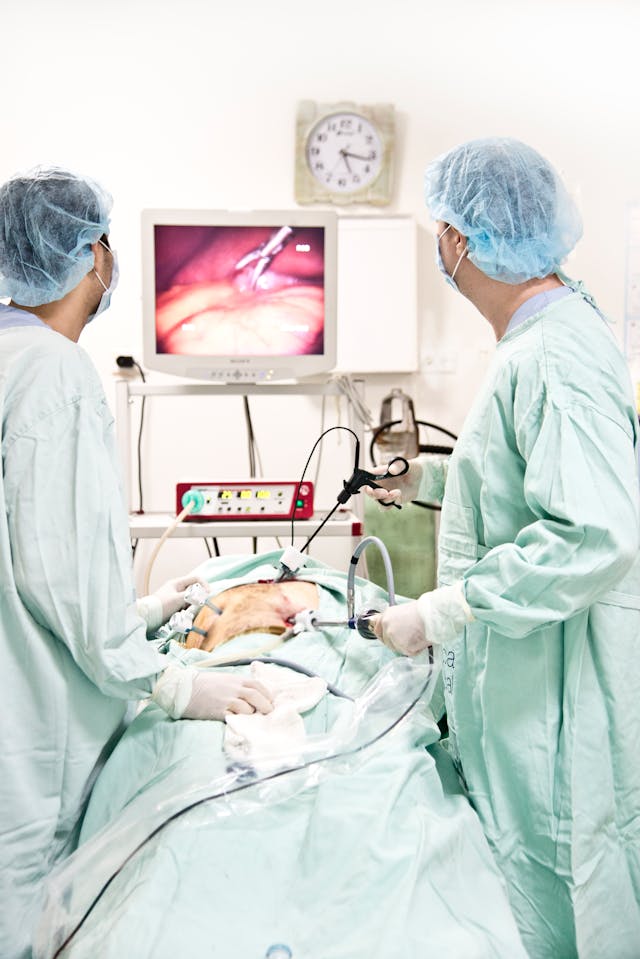
Dr. Yang Kun led the operation, assisted by Dr. Chen Xiaolong (Associate Chief Physician) with Dr. Zhang Weihan (Associate Professor) managing the laparoscopic camera.
Using ultrasonic dissection instruments, the team meticulously separated the adhesions layer by layer — a process described as delicately peeling apart tangled silk threads. The goal was twofold:
- Completely remove the recurrent tumor with clear margins
- Preserve as much healthy stomach wall as possible
The results speak for themselves:
| Surgical Metric | Outcome |
|---|---|
| Tumor removal | Complete resection |
| Surgical margins | Clear — no residual tumor on frozen pathology |
| Intraoperative blood loss | Minimal |
| Organ damage | None |
| Time to walking | Day 1 post-surgery |
| Time to eating | Day 1 post-surgery |
| Hospital discharge | Within days |
| Post-operative pain | Mild |
Open Surgery vs. Laparoscopic: What the Patient Gained
| Factor | Open Surgery (Traditional) | Laparoscopic (This Case) |
|---|---|---|
| Incision | 15-20 cm abdominal cut | 3-4 small ports (5-12mm each) |
| Recovery time | 2-4 weeks | Days |
| Post-operative pain | Significant | Mild |
| Infection risk | Higher | Lower |
| Scarring | Large scar (patient already had 20cm scar) | Minimal |
| Hospital stay | 7-14 days | 3-5 days |
Why This Matters for International Patients
Gastrointestinal stromal tumors affect approximately 10-15 per million people worldwide. While many GISTs can be surgically removed, recurrence rates range from 40-90% depending on tumor characteristics — meaning a significant number of patients face the prospect of repeat surgery.
Until now, those repeat operations almost always meant another major open procedure with all its associated risks and long recovery times. This case from West China Hospital demonstrates that even the most adhesion-heavy, anatomically distorted abdomens can be safely approached laparoscopically — if the surgical team has sufficient expertise.
About West China Hospital
West China Hospital is consistently ranked among China's top 3 hospitals and is recognized as one of the leading medical institutions in Asia:
- Founded in 1892 — Over 130 years of medical history
- 4,300+ beds — One of the largest single-site hospitals in the world
- Gastric Cancer Center — One of China's highest-volume centers for stomach cancer surgery
- Research powerhouse — Affiliated with Sichuan University, a top-10 Chinese university
- Located in Chengdu, a major international hub with direct flights from many global cities
GIST Treatment Cost: China vs Western Countries
| Procedure | China (West China Hospital) | United States |
|---|---|---|
| Laparoscopic GIST removal | $8,000 - $15,000 | $40,000 - $80,000 |
| Open GIST removal | $6,000 - $12,000 | $35,000 - $70,000 |
| Targeted therapy (imatinib/year) | $3,000 - $8,000 | $100,000 - $150,000 |
China prices include surgery, hospital stay, pathology, and post-operative care.
Access This Level of Care
Through SinomedTrip, international patients can access West China Hospital's gastric surgery expertise:
- Submit your medical records — CT scans, pathology reports, and surgical history
- Receive a treatment plan from the Gastric Cancer Center team within 48 hours
- Travel to Chengdu with full concierge support — airport pickup, accommodation, interpreter
- Surgery and recovery with 24/7 bilingual coordination
- Follow-up care via telemedicine after returning home
Dealing with a recurrent GIST or complex abdominal tumor? Get a free surgical consultation →