23-Year-Old's Mystery Hypertension Solved by Rare Tumor Removal in Xi'an
His Blood Pressure Hit 200 — and No Medication Could Bring It Down
For six months, a 23-year-old man had been battling hypertension that made no sense. He was young, fit, and had no family history of heart disease. Yet his blood pressure readings were hitting 200/110 mmHg — stroke-level numbers that multiple medications couldn't control.
Doctors at local clinics adjusted his prescriptions again and again. Nothing worked.
When he finally arrived at Shaanxi Provincial People's Hospital in Xi'an, the urology team ran a full endocrine workup. The results explained everything: his free norepinephrine levels were 24 times the normal value. Something inside his body was flooding his bloodstream with adrenaline-like hormones.
CT imaging revealed the source — not one tumor, but multiple paragangliomas scattered across his abdomen in the worst possible locations.
What Are Paragangliomas?
Paragangliomas are rare neuroendocrine tumors that grow along nerve pathways, typically in the abdomen, chest, or head and neck. Unlike most tumors, they are hormonally active — they produce massive amounts of catecholamines (adrenaline and noradrenaline), causing:
- Severe, drug-resistant hypertension
- Heart palpitations and arrhythmias
- Headaches, sweating, and anxiety attacks
- Risk of hypertensive crisis during any surgical procedure
They account for roughly 2-8 cases per million people per year. Multiple paragangliomas in one patient are even rarer, and they often carry a genetic component — particularly mutations in the SDHx gene family.
Why This Case Was Exceptionally Dangerous
The tumor locations read like a surgical nightmare:
| Tumor Location | Nearby Critical Structures |
|---|---|
| Upper abdomen | Wedged between the inferior vena cava, aorta, left renal vein, and portal vein — the body's four major abdominal blood vessels |
| Iliac region | Adhered to the common iliac vein, with tumor invading the vessel wall |
| Presacral space | Deep in the pelvis, surrounded by nerve plexuses |
The upper abdominal tumor had already compressed and deformed the inferior vena cava — the largest vein in the body. Any accidental tear during removal could cause fatal hemorrhage in seconds.
And because these tumors produce adrenaline, simply touching them during surgery can trigger massive blood pressure spikes or cardiac arrest — making anesthesia management extraordinarily complex.
The Surgical Plan
Dr. Jiang Yazhuo, Chief Physician and the hospital's leading adrenal disease specialist, designed a two-phase approach:
Phase 1 — Medical preparation (weeks before surgery)
Under guidance from endocrinology (Dr. Zhang Yuqing) and cardiology (Dr. Deng Zhengrong), the patient received:
- Phenoxybenzamine — An alpha-blocker to gradually lower blood pressure
- Volume expansion — IV fluids to compensate for the chronically constricted blood vessels
- Treatment continued until blood pressure was stable in both lying and standing positions
This preparation phase is critical. Operating on an unprepared paraganglioma patient has historically carried mortality rates up to 30-45%. With proper preparation, this drops to under 3%.
Phase 2 — Laparoscopic simultaneous resection
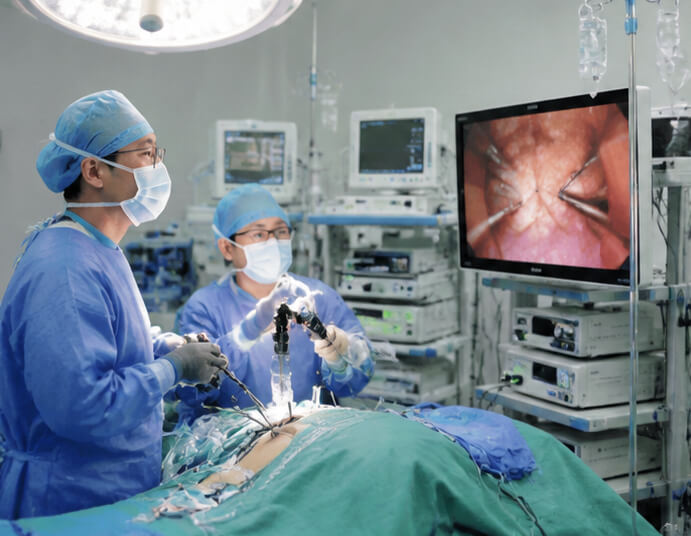
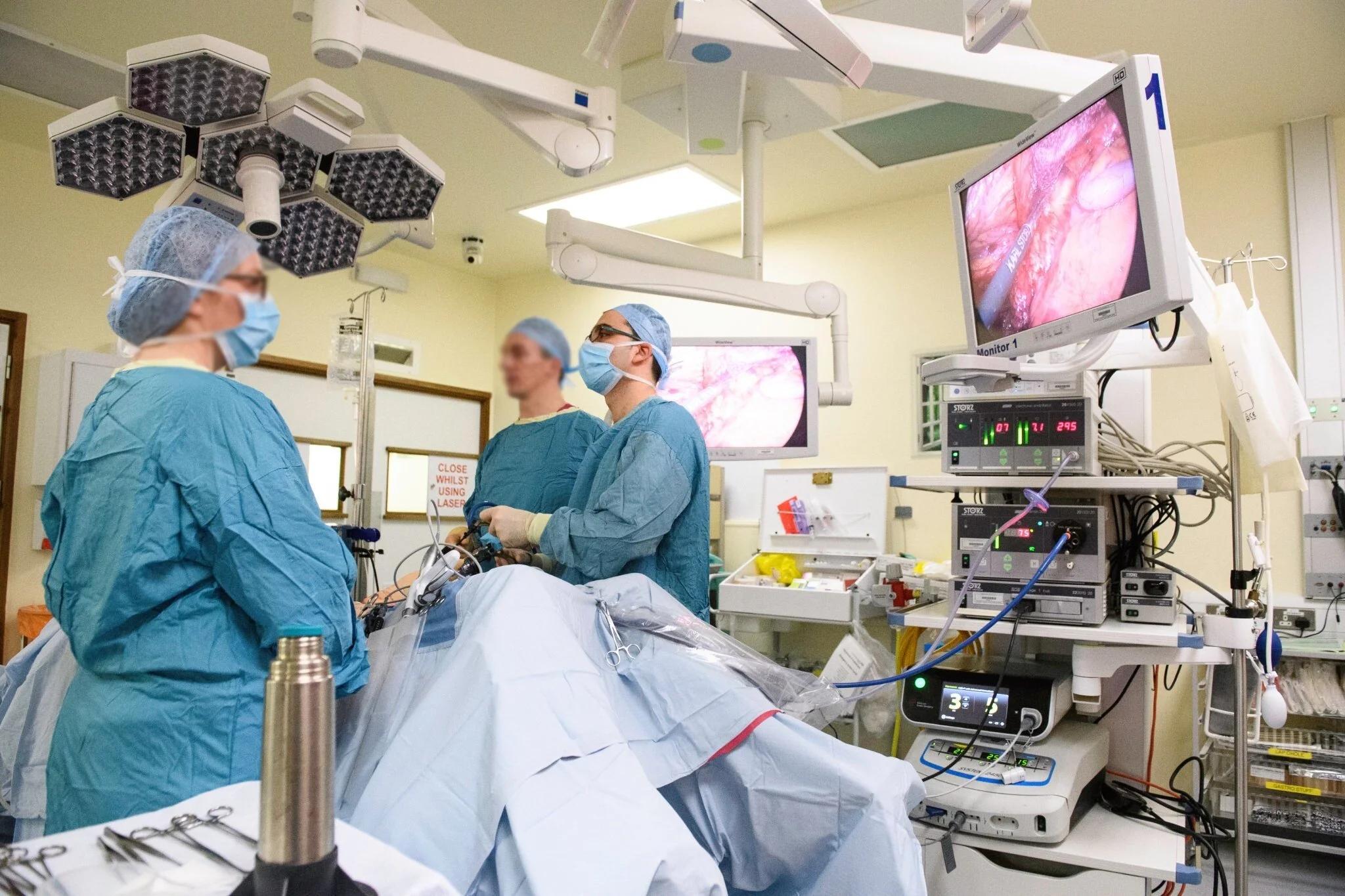
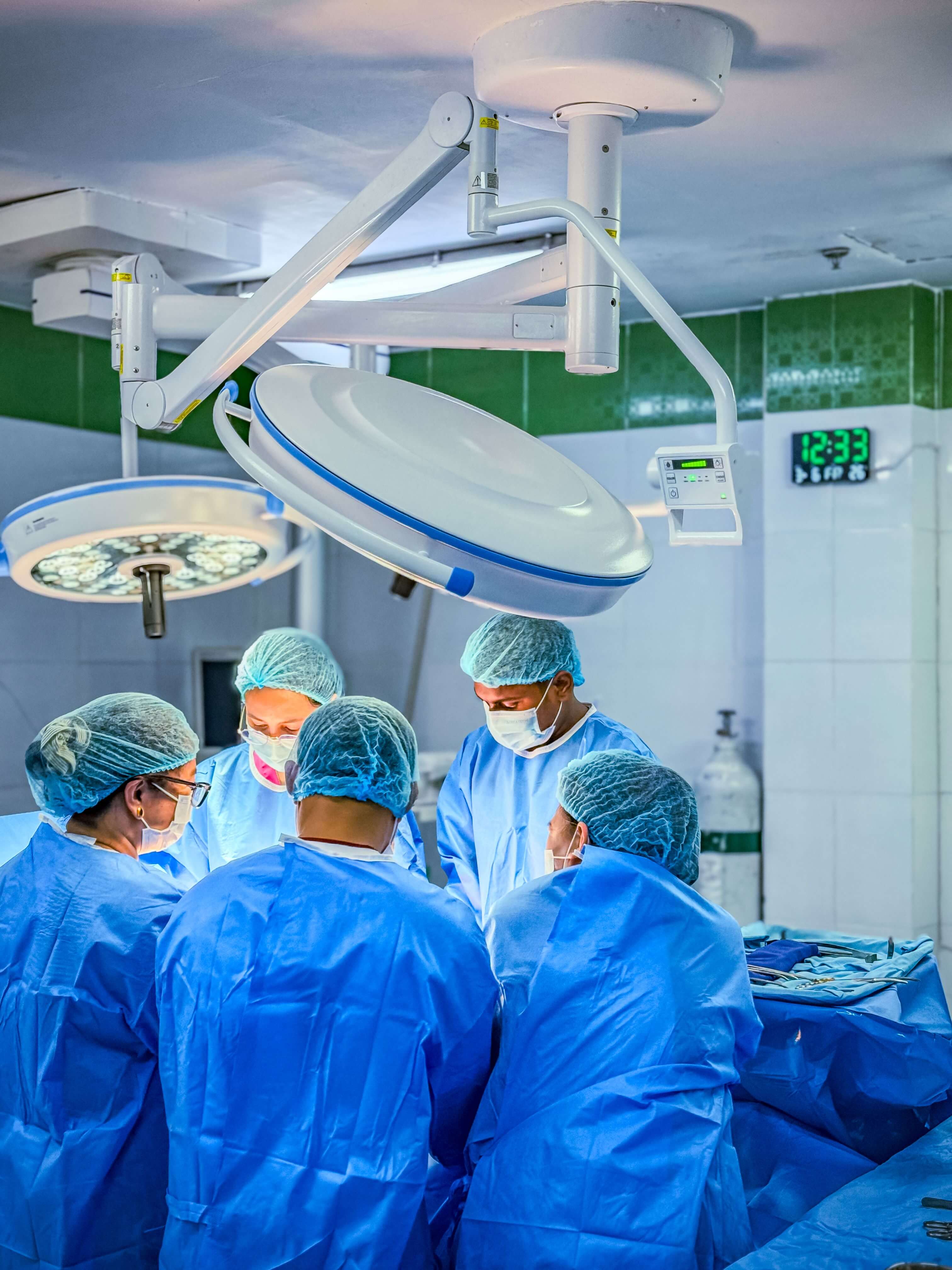
Rather than staging multiple separate operations (which would mean multiple anesthesia events, each carrying the risk of catecholamine crisis), the team elected to remove all tumors in a single session using laparoscopic/robotic-assisted techniques.
The operation required:
- Anesthesia team led by Dr. Song Yulong — continuous arterial blood pressure monitoring with instant-acting vasoactive drugs on standby
- Hepatobiliary surgery collaboration — Dr. Zhang Yu, department chief, co-operated on the upper abdominal tumor hidden behind the liver's caudate lobe
- Partial iliac vein wall resection — Where tumor had invaded the vessel, the affected segment was excised and repaired
- Microscopic precision — The upper abdominal tumor sat in a space barely large enough for instruments, requiring millimeter-level dissection
The Outcome
All tumors were successfully removed. Pathology confirmed: paraganglioma in every specimen.
The patient's blood pressure normalized post-operatively without medication — confirming that the tumors were the sole cause of his hypertension.
The team recommended SDHx germline mutation genetic testing to assess whether the condition is hereditary and whether family members may be at risk.
Adrenal and Endocrine Surgery Cost: China vs Western Countries
| Procedure | China | United States | Germany |
|---|---|---|---|
| Laparoscopic adrenalectomy (single tumor) | $5,000 - $10,000 | $25,000 - $50,000 | $15,000 - $30,000 |
| Multiple paraganglioma resection (complex) | $10,000 - $20,000 | $50,000 - $100,000 | $30,000 - $60,000 |
| Robotic-assisted endocrine surgery | $12,000 - $22,000 | $40,000 - $80,000 | $25,000 - $50,000 |
| Genetic testing (SDHx panel) | $300 - $600 | $2,000 - $5,000 | $1,000 - $3,000 |
China prices include surgery, pre-operative preparation, hospital stay, pathology, and follow-up.
Who Should Consider Evaluation in China?
This type of specialized endocrine surgery is relevant for patients with:
- Drug-resistant hypertension in young patients — may indicate an underlying tumor
- Known paraganglioma or pheochromocytoma — especially multiple or recurrent tumors
- SDHx gene mutation carriers — requiring surveillance and potential prophylactic surgery
- Failed prior surgery — Tumors in difficult locations that other centers declined to operate on
Frequently Asked Questions
Can paragangliomas be cancerous?
Approximately 10-15% of paragangliomas are malignant. The only definitive sign of malignancy is metastasis to distant sites. This is why complete surgical removal and long-term follow-up are essential.
Why is genetic testing recommended?
Up to 40% of paraganglioma patients carry hereditary mutations, most commonly in the SDHx gene family. Identifying a mutation allows screening of family members before symptoms develop.
Is laparoscopic removal safe for tumors near major blood vessels?
In experienced hands, yes. The key is meticulous pre-operative imaging, careful medical preparation, and a surgical team with specific expertise in adrenal and retroperitoneal tumors. Shaanxi Provincial People's Hospital's MDT approach — combining urology, hepatobiliary surgery, endocrinology, cardiology, and anesthesia — is designed precisely for these high-risk cases.
How long is the hospital stay?
Typically 5-7 days for complex multi-site paraganglioma surgery, compared to 10-14 days for traditional open approaches.
Dealing with drug-resistant hypertension or a suspected adrenal tumor? Request a free consultation →