1.2 Kilograms, 4 Days Old: How Tongji Hospital Saved a Premature Baby with a Ruptured Stomach
A Stomach Torn Open Before Life Had Barely Begun
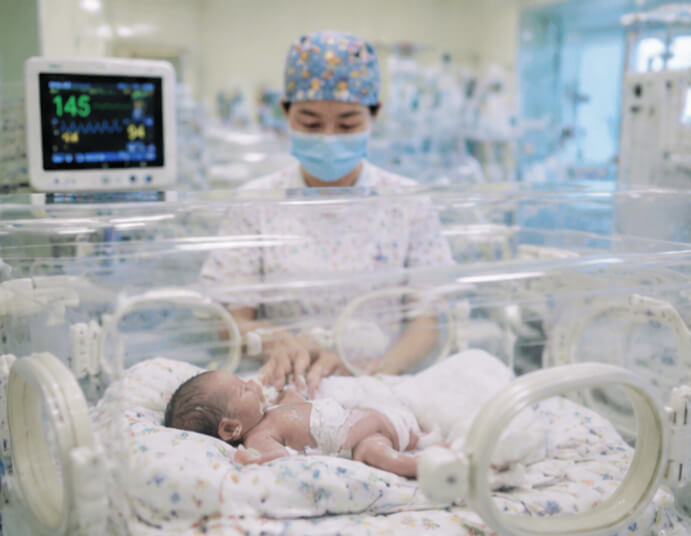
She weighed 1.2 kilograms — barely 2.6 pounds — when her stomach ruptured.
Born premature and critically fragile, the infant was just four days old when she suddenly developed severe abdominal distension and her breathing became dangerously weak. Doctors at Tianmen First People's Hospital in Hubei province discovered a 5-centimeter perforation in her stomach wall — caused by a rare congenital defect called gastric wall muscular layer deficiency.
In a full-term baby, this would be an emergency. In a 1.2 kg premature infant, it was a near-death sentence. The baby's abdomen was filling with gastric contents, infection was spreading, and her tiny body was going into shock.
A late-night emergency transfer was initiated to Tongji Hospital (Huazhong University of Science and Technology) in Wuhan — one of the few institutions in Central China with the neonatal surgical capability to attempt this rescue.
Why This Case Was Extraordinarily Dangerous
Operating on a premature neonate presents challenges that scale inversely with body weight — the smaller the baby, the harder everything becomes:
| Challenge | Adult Surgery | This Case (1.2 kg Neonate) |
|---|---|---|
| Blood volume | ~5 liters | ~96 ml (less than half a cup) |
| Tissue thickness | Robust, easy to suture | Paper-thin, tears easily |
| Anesthesia tolerance | Standard protocols | Extreme sensitivity — tiny dosing errors are fatal |
| Infection resistance | Mature immune system | Virtually no immune defense |
| Temperature regulation | Self-regulating | Hypothermia within minutes of exposure |
Add to this a 5-cm gastric perforation — a hole larger than the baby's fist — with widespread abdominal contamination, and the surgical team faced one of the most technically demanding scenarios in pediatric surgery.
The Midnight Rescue
The case activated the medical alliance's green-channel transfer system. At Tianmen First People's Hospital, Dr. Xiong Li (neonatology) performed emergency abdominal puncture to decompress the abdomen before transfer — a critical stabilization step that bought enough time for the ambulance journey to Wuhan.
At Tongji Hospital, the pediatric surgery team led by Professor Feng Jiexiong was already assembled. Dr. Xiong Xiaofeng, Associate Chief Physician of Pediatric Surgery, led the operation.
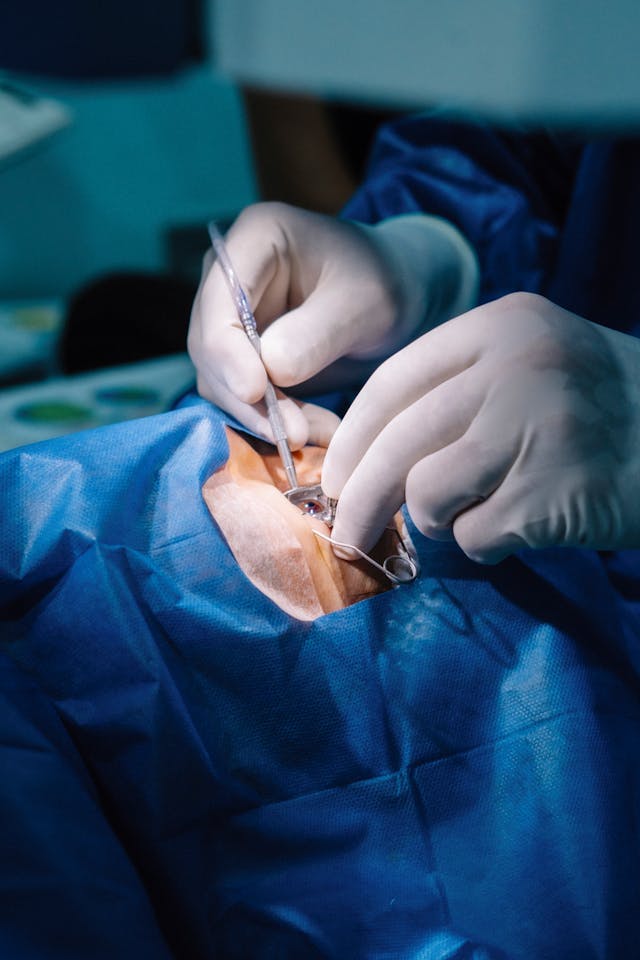
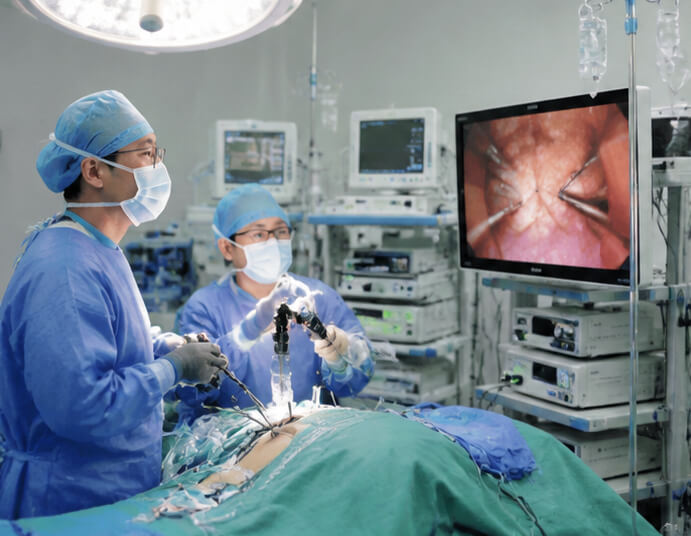
Surgery began at 11:30 PM. Duration: 1 hour 20 minutes.
The team meticulously:
- Excised all necrotic (dead) stomach tissue surrounding the perforation
- Repaired the gastric wall with precision microsurgical suturing
- Thoroughly cleaned the contaminated abdominal cavity to prevent further infection
The Recovery
Post-operatively, Dr. Li Wenbin (Chief Physician, Neonatology) led the intensive care management. Over the following month, the medical team navigated the gauntlet of complications that threaten every critically ill premature infant: infection risk, feeding intolerance, respiratory support, and thermoregulation.
One month later, the results:
| Metric | At Admission | At Discharge |
|---|---|---|
| Weight | 1.2 kg | 2.5 kg |
| Daily feeding volume | Zero (NPO) | 450 ml |
| Vital signs | Unstable, shock | Normal |
| Abdominal status | 5-cm perforation, contamination | Fully healed |
The Medical Alliance Model
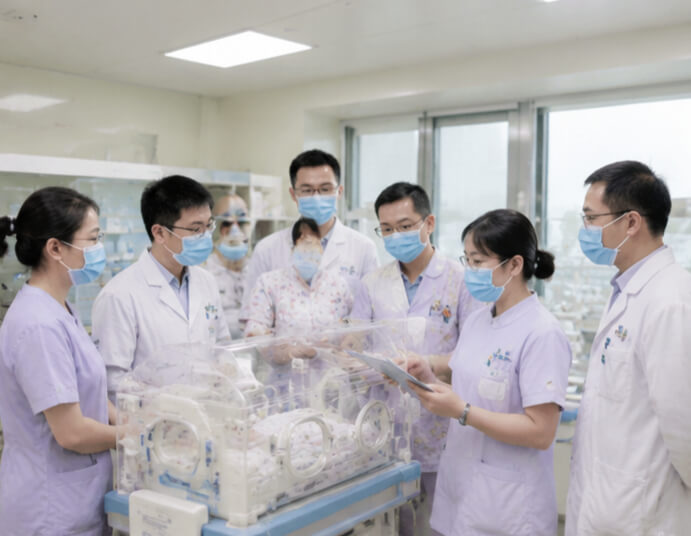
This case demonstrates the power of China's medical alliance (医联体) system — a structured partnership between top-tier urban hospitals and regional medical centers. When Tianmen's local hospital identified a case beyond their surgical capability, the green-channel transfer to Tongji Hospital was activated within hours, ensuring the baby received definitive care without life-threatening delays.
For international patients, this model means that even if a medical emergency occurs outside a major city, the transfer infrastructure to reach world-class care is already in place.
Neonatal Surgery Cost: China vs Western Countries
| Procedure | China (Tongji Hospital) | United States |
|---|---|---|
| Emergency neonatal abdominal surgery | $5,000 - $12,000 | $40,000 - $100,000 |
| NICU stay (per day) | $300 - $600 | $3,000 - $10,000 |
| 30-day NICU + surgery (total) | $15,000 - $30,000 | $150,000 - $400,000 |
| Neonatal transport (inter-hospital) | $500 - $1,500 | $10,000 - $30,000 |
China prices include surgery, NICU stay, medications, nutrition support, and follow-up.
About Tongji Hospital Pediatric Surgery
Tongji Hospital's pediatric surgery department, led by Professor Feng Jiexiong, is among the strongest in Central China:
- Affiliated with Huazhong University of Science and Technology — a top-10 Chinese university
- Full neonatal surgical capability — including congenital malformations, intestinal emergencies, and complex reconstructive procedures
- Level III NICU with 24/7 specialist coverage
- Medical alliance partnerships with regional hospitals across Hubei province for rapid patient transfer
- Located in Wuhan, with direct international flights from major global cities
Does your child need specialized neonatal or pediatric surgical care? Request a free consultation →