Wrapping Tumors in Electricity: Tangdu Hospital Uses Irreversible Electroporation to Destroy Cancers Near Critical Structures
When Heat Can't Be Used — Electricity Becomes the Weapon
Thermal ablation techniques — radiofrequency ablation (RFA) and microwave ablation (MWA) — have become standard tools for destroying tumors without surgery. But they share a critical limitation: heat damages everything in its path, including blood vessels, bile ducts, and nerves. When a tumor sits adjacent to these critical structures, thermal ablation is either too dangerous or simply impossible.
At Tangdu Hospital (Air Force Medical University, Xi'an), the interventional team has deployed a fundamentally different technology: irreversible electroporation (IRE), commercially known as NanoKnife — a technique that destroys cancer cells with precisely calibrated electrical pulses while leaving the structural scaffolding of blood vessels, bile ducts, and nerves intact.
How IRE/NanoKnife Works
Unlike heat-based ablation, IRE uses high-voltage, ultra-short electrical pulses (microseconds) delivered through needle electrodes placed around the tumor. These pulses create permanent pores in cancer cell membranes, causing the cells to die through a natural process (apoptosis) rather than thermal destruction.
The critical advantage: connective tissue structures (collagen-based) are resistant to IRE. This means:
| Structure | Thermal Ablation | IRE/NanoKnife |
|---|---|---|
| Blood vessels | Damaged — risk of hemorrhage or thrombosis | Preserved |
| Bile ducts | Destroyed — stricture and obstruction | Preserved |
| Nerves | Damaged — permanent functional loss | Preserved (function recovers) |
| Tumor cells | Killed by heat | Killed by membrane disruption |
Clinical Applications
IRE is particularly valuable for tumors that are "untouchable" by conventional ablation:
- Pancreatic tumors — Adjacent to the portal vein, superior mesenteric artery, and bile duct
- Liver tumors near major vessels — Central hepatic lesions adjacent to the hepatic veins or IVC
- Bile duct tumors (cholangiocarcinoma) — Where preserving the duct is essential
- Recurrent tumors after previous ablation — Where thermal injury has already compromised surrounding tissue
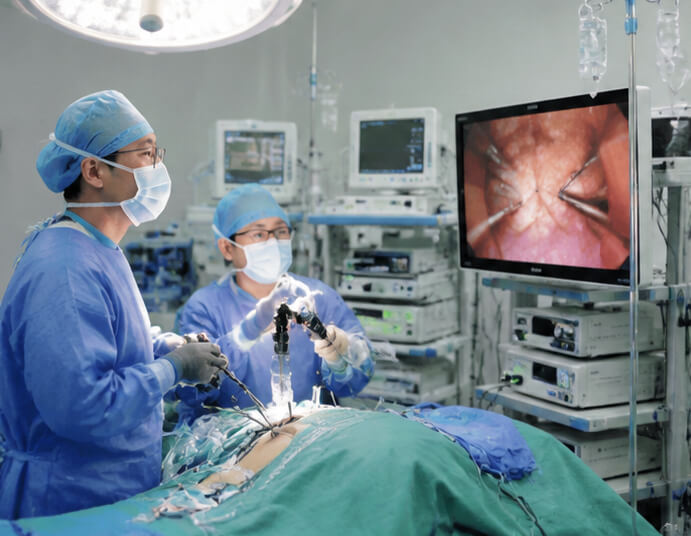
The Tangdu team demonstrated successful tumor ablation with post-procedure imaging confirming complete tumor destruction and preserved patency of adjacent critical structures. Tumor markers showed progressive decline on follow-up.
Tumor Ablation Cost: China vs Western Countries
| Procedure | China (Tangdu Hospital) | United States |
|---|---|---|
| IRE/NanoKnife ablation | $8,000 - $18,000 | $30,000 - $80,000 |
| Radiofrequency ablation (RFA) | $3,000 - $8,000 | $15,000 - $40,000 |
| Microwave ablation (MWA) | $3,000 - $8,000 | $15,000 - $40,000 |
| Pancreatic tumor resection (Whipple) | $12,000 - $22,000 | $60,000 - $120,000 |
China prices include procedure, electrode probes, imaging guidance, hospital stay, and follow-up.
About Tangdu Hospital
- Affiliated with Air Force Medical University — one of China's top military medical universities
- Interventional radiology/oncology with NanoKnife and full ablation platform capability
- Located in Xi'an — SinomedTrip's home city
Have a tumor near critical structures that's been called "inoperable"? Request a free consultation →